sales@bonporaparts.com
0086-10-64988621
English
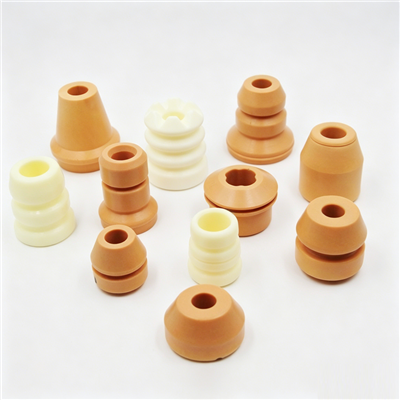
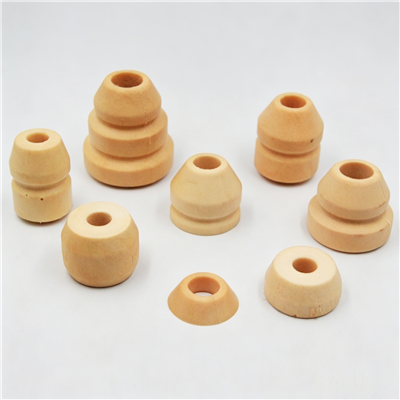
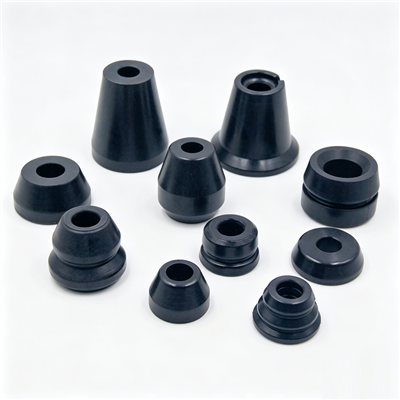
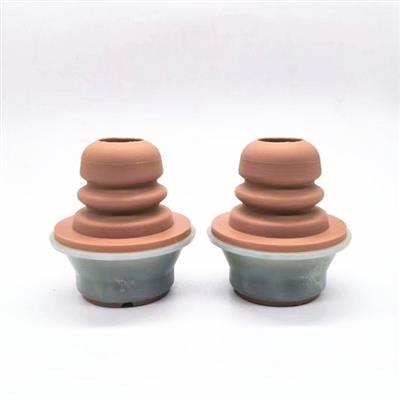
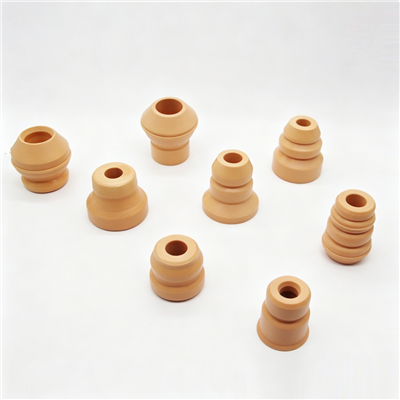
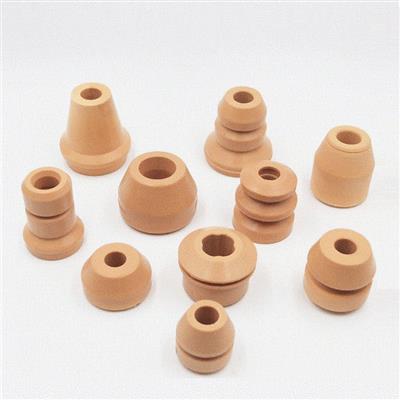
The row behind this article describes a jounce bumper, also known as a bump stop, bump rubber, rubber buffer or strut bumper, produced from high elasticity polyurethane based on MDI or NDI chemistry and fitted inside the suspension damper of off-road vehicles, race cars and motorcycles. It provides progressive stiffness during large suspension compression, prevents metal to metal contact, absorbs high impact energy and, on a motorcycle rear shock, acts as an end stop and reduces chain impact.
Those functions are decided long before the part reaches a vehicle. Two bumpers with identical outer dimensions can behave completely differently if the compound, the mixing discipline or the cure schedule differs. For a distributor or a workshop that buys this part in volume, understanding the production route is what makes supplier claims checkable rather than decorative.
The source row names both MDI and NDI polyurethane systems. MDI based elastomers are the general purpose choice: they cast well, hold a wide hardness band and give predictable fatigue behaviour across a broad range of suspension applications. NDI based systems are used where dynamic load is higher and where rebound efficiency and heat build up under repeated cycling matter more, which is typical of competition and heavy off-road duty.
The practical consequence for a buyer is that the two systems are not interchangeable at the same hardness number. A quotation that lists only a hardness figure without naming the system has not specified the part.
Hardness is a material check. The stiffness curve is the performance check. A bumper is designed to build force progressively as it compresses, so the useful acceptance criterion is a force at a stated deflection, measured on the finished article, rather than the compound hardness alone. The source row lists the stiffness curve as one of the four named tests, which is the correct emphasis for this product.
The stated operating range is minus 40 to plus 100 degrees Celsius, covering high temperature desert use and low temperature snow use. Both ends of that range stress the compound in different ways: cold stiffens the elastomer and raises the risk of brittle cracking on impact, while sustained heat softens it and increases permanent deformation. A production specification should therefore quote the range explicitly, not as a marketing phrase but as a design input.
Cast polyurethane arrives as two or three components: a prepolymer or polyol side, an isocyanate side and often a chain extender or catalyst. Each lot should be checked for the supplier certificate, batch number, storage temperature history and, where the factory is serious about control, moisture content and isocyanate value. Moisture is the classic enemy: water reacts with isocyanate and produces carbon dioxide, which shows up later as voids inside the section.
Once a batch is mixed, the clock runs. Pot life depends on the formulation, the catalyst level and the temperature of the workshop, so the mix size has to be matched to the number of molds that can be filled and closed inside that window. A batch that is poured too late produces short fills and weak knit lines even though nothing visible went wrong at the time.
Air entrained during mixing is removed by vacuum degassing before the pour, and mold filling is arranged so that air can escape at the high points. Voids matter more in a bumper than in a cosmetic part because the section is loaded in compression: a void near the strike face becomes a crack initiation site and turns into a tear under repeated impacts.
Simple sections can be cast in open molds, which is economical for short runs and prototypes. Closed molds give better dimensional repeatability and a cleaner surface, and they are the normal route for volume production of a bumper with a defined seat diameter and a controlled flange.
The cure schedule is a temperature and time recipe. Demolding too early produces sections that creep out of tolerance after a few days, because the material continues to develop its properties. Post cure, where the part is held at elevated temperature for a defined period, completes the reaction and stabilises hardness and compression set.
Flash removal has to be done without leaving nicks along the loaded edge. A knife mark on the cylindrical wall behaves like a notch and can halve the fatigue life of an otherwise sound part, so the finishing standard belongs in the inspection plan.
| Production step | Control point | Record to keep |
|---|---|---|
| Raw material receipt | Lot certificate, storage temperature, moisture | Incoming inspection sheet |
| Mixing | Ratio by weight, mix time, batch temperature | Mix log with batch number |
| Degassing | Vacuum level and hold time | Process parameter sheet |
| Pouring and closing | Fill time, mold temperature, pot life window | Production card |
| Cure and post cure | Oven temperature and duration | Oven chart |
| Trimming | Flash standard, no notch on loaded edge | Visual inspection record |
| Final inspection | Hardness, dimensions, stiffness curve sample | Test report by batch |
The source row names four tests as part of the quality standard: stiffness curve, fatigue life, tear strength and ozone ageing resistance, under an IATF 16949 quality system. Each test answers a specific question, and the table below shows how to read the evidence when a supplier presents it.
| Test | What it proves | How often to expect it |
|---|---|---|
| Hardness (Shore A) | Compound matches the approved formulation | Every batch, as a quick incoming check |
| Stiffness curve | Force builds as intended through the travel | Every new reference, plus periodic requalification |
| Fatigue life | Cycles to failure under repeated compression | Design validation and after any compound change |
| Tear strength | Resistance to crack growth after an impact | Design validation, and for competition grades |
| Ozone ageing | Surface survives outdoor exposure without cracking | Externally mounted parts and long storage life |
| Compression set | Recovery after long compression at temperature | Batch monitoring for parts held in stock |
A usable report states the test speed, the deflection range and the force at two or three points. A single peak force number is not enough to judge a progressive bumper, because two parts can share a peak value while building force quite differently in the first ten millimetres of travel.
Fatigue results should be quoted with the stroke used and the failure criterion, whether that is a visible crack, a drop in force or complete rupture. Without the stroke, a cycle number cannot be compared with a competing offer.
Because the stated design life is measured in years as well as distance, no less than 5 years or 80,000 km for off-road vehicles and no less than 3 years or 30,000 km for motorcycles, compression set is the test that protects a distributor holding stock. A part that has been stored under load in a hot warehouse can lose recovery before it is ever fitted.
| Defect | Likely cause | Containment action |
|---|---|---|
| Internal voids | Inadequate degassing or moist material | Quarantine batch, section a sample, review vacuum log |
| Short fill | Pot life exceeded or mold too cold | Reject article, confirm mold temperature |
| Knife marks on the wall | Trimming method | Retrain operator, re-inspect the shift output |
| Hardness drift | Metering error or incomplete cure | Recheck ratio records, hold the batch |
| Flats after storage | Cartons stacked above the part | Change the loading pattern, rest before release |
| Surface cracking after season | Ozone exposure without protection | Confirm antiozonant level, review packaging film |
Each entry pairs a visual symptom with a process cause and a containment step, which is what turns a complaint into a corrective action instead of a replacement shipment.
Traceability means that a finished carton can be walked back to the mix log, the mold, the cure chart and the raw material lots. It also runs in the other direction: when a raw material lot is questioned, the factory can identify every shipped article that contains it.
For an off-road programme the practical minimum is a batch number on the part or its bag, a production card linking batch to date and shift, and retained test data for hardness and stiffness at the agreed frequency. Where a reference was developed from a customer drawing or sample, the approved drawing revision should be recorded against the batch so that a later field question can be answered with the exact configuration supplied.
Polyurethane is resilient but not immune to storage. Three rules protect the investment. Keep the parts out of direct sunlight, because ultraviolet light and ozone attack the surface. Avoid sustained compression, so cartons should not be overfilled or stacked so that the lowest layer carries the weight of the pallet. And respect the recommended storage temperature, particularly in a hot climate where a closed container can reach temperatures well above the workshop air.
For export shipments, a sealed bag with desiccant is reasonable for long sea transit, and the carton should state the reference, the quantity and the batch. A distributor who receives mixed references in an unlabelled carton has lost traceability before the goods reach the shelf.
Four questions separate a factory that controls the process from one that only measures the finished part. First, which compound system is used for this reference, and is it the same system used for the approved sample. Second, what is the stiffness curve acceptance window, and who signs the release. Third, what happens to a batch that fails hardness or compression set, and is there a written containment record. Fourth, which documents travel with the shipment: batch number, test data and the drawing revision.
A supplier who can answer all four from records, without preparing a special response, is operating a system. That is the practical meaning of the IATF 16949 reference in the source row.
No. Hardness raises the force for a given deflection, but strength and fatigue life depend on the compound system, the cure and the absence of internal defects. A hard part with voids can fail earlier than a softer sound one.
Often yes, within a limited band, by changing the compound. Beyond that band the section itself has to change. Because the source row accepts customisation based on travel, stiffness and mounting dimensions, a genuine requirement is better met by revising the part than by overloading one compound.
Cold stiffens polyurethane, and a part held compressed for a long period may also show slower recovery. Condition the part at normal workshop temperature before judging it, and test hardness on a part that has not been sitting under load.
Batch number, hardness result for the batch, and the drawing or sample revision for the reference. Where the customer has requested it, add the stiffness curve result and the raw material lot numbers.
Bonpora Parts and Components produces polyurethane jounce bumpers and suspension buffers for off-road vehicles, race cars and motorcycles, and can supply process data, test reports and first articles against a drawing. Review the off-road range, compare the polyurethane bump stop range, and read the jounce bumper selection guide and the failure analysis article alongside this one. Custom sections are handled by the custom parts service, and the contact page reaches the engineering team with your travel, stiffness and mounting data.