sales@bonporaparts.com
0086-10-64988621
English
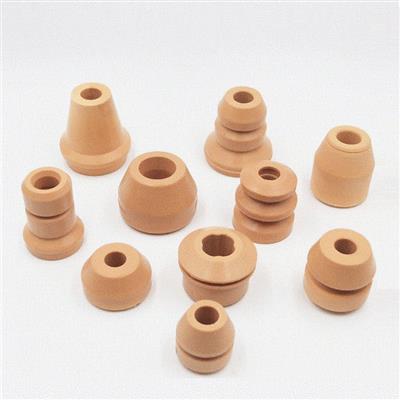
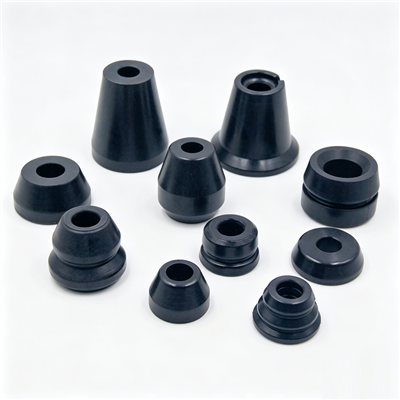
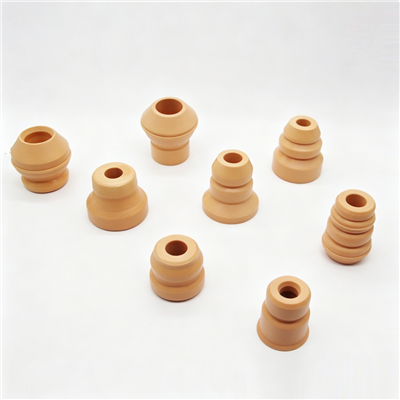
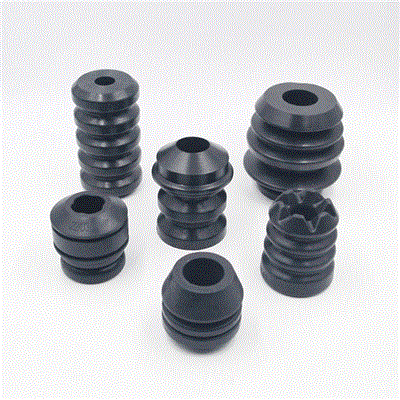
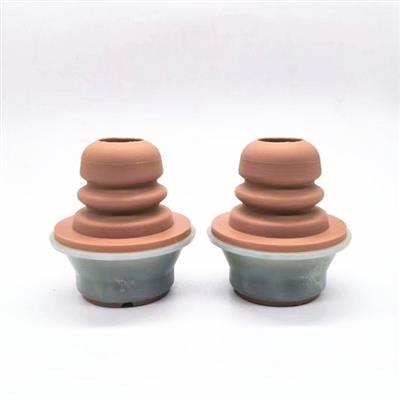
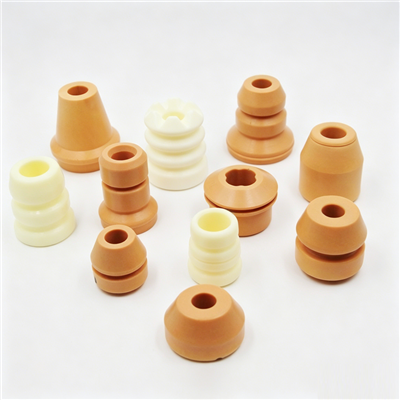
The part described in the Bonpora source row is a jounce bumper, also known as a bump stop, bump rubber, rubber buffer or strut bumper. It is an elastic component typically made of high-elasticity polyurethane using MDI or NDI chemistry, installed in the suspension damper of off-road vehicles such as SUVs, pickups and race cars, and also on motorcycles and motorsport vehicles.
Its working life is harder than that of a road car bumper. On an off-road vehicle it provides progressive stiffness during significant suspension compression, absorbs high-impact energy in extreme conditions such as jumps and rough terrain, and protects the shock absorber and frame from metal-to-metal contact. Each of those duties leaves its own signature on a worn part, and reading that signature is what makes a diagnosis reliable.
The source row states that under standard off-road operating conditions the design life is no less than 5 years or 80,000 km, and no less than 3 years or 30,000 km for motorcycles, without cracking, extrusion or significant permanent deformation. Those three conditions are also the three failure modes that appear in the field most often.
Cracks that run around the outside of the bumper usually start where the section changes or where the part first contacts its strike pad. They indicate repeated high-strain cycling and are the most common end-of-life mode on a vehicle used regularly on rough surfaces.
Extrusion is the signature failure of this product family. If the gap the bumper is forced into is smaller than its section, the material is pushed outwards instead of compressing cleanly. The part takes a permanent flange shape, and once that has happened the stiffness curve no longer matches the design.
A bumper that has been driven to its stop many times can lose free height. It then contacts earlier, uses up travel that the suspension still has available, and changes the balance of the vehicle at the limit.
Continuous cycling combined with high ambient temperature raises the internal temperature of the elastomer. The part hardens, the rebound becomes sluggish and the force at a given deflection rises. This mode is often invisible on a visual check, which is why exposure history matters.
A single hard event, a landing on the stop or contact with debris can tear the material. Tear strength is one of the properties tested in production precisely because a tear, once started, grows quickly under further cycling.
An externally mounted stop sees sunlight and ozone directly. Surface crazing develops first and can progress into cracking. Ozone ageing resistance is named as a production test in the source row for this reason.
Drivers rarely report the part. They report what the vehicle does.
| Symptom reported | Possible bumper condition | Also check |
|---|---|---|
| Harsh landing after a jump | Permanent set, reduced gap | Damper condition and travel available |
| Metallic clunk over a rock step | Extruded or collapsed bumper | Metal-to-metal evidence on the strike pad |
| Oil mist around the damper | Not a bumper fault | Damper seal, shaft condition |
| Rear end sits lower than before | Lost free height | Spring rate and ride height setting |
| Stiffer than expected at the limit | Heat aged compound | Operating temperature and duty history |
| Visible tear after an event | Impact damage | Suspension geometry and any bent component |
Two of those rows deliberately point away from the bumper. A damper that has lost its gas charge or its oil will let the suspension reach the stop far more often than it should, and the bumper is then the victim rather than the cause.
The contact face tells you how hard the stop has been working. A polished or deformed pad means the suspension has been reaching full bump repeatedly, which shortens the life of any bumper.
Measure the exposed length of the bumper at static ride height and compare it with a new part of the same reference. A reduction is the simplest indicator of set or extrusion.
Cracks that are invisible in normal light become obvious under a side light. Look at the outer diameter and around any change in section.
Oil on the bumper softens some compounds and speeds cracking, and trapped grit works like an abrasive. If oil is present, find the source before replacing the part.
Look for a leaking seal, a bent shaft, a damaged spring seat or a change in ride height. If the suspension has been modified since the bumper was fitted, confirm that the travel remaining at the stop is still what the part was specified for.
Where a decision has to be documented, three measurements are usually enough when they are compared against a new part of the same reference.
| Check | Method | Replacement is justified when |
|---|---|---|
| Free height recovery | Remove, rest, then measure | The height stays clearly below the new part |
| Deflection force | Apply a known deflection and read the force | The force no longer follows the design curve |
| Hardness | Durometer reading on a flat face | The reading is outside the agreed band |
| Visual crack and tear check | Side light after cleaning | Cracks have joined or a tear has formed |
| Shape check | Compare against a new part | Extruded flange or a deformed contact face |
The deflection force check is the most informative single test, because it detects a heat aged compound, a set part and an extruded part at the same time.
This distinction saves the most money in practice. A bumper that has to absorb the energy a damper should have handled will fail early no matter how good the compound is.
Four signs point to the damper rather than the bumper. The damper body shows oil mist or a wet film. The shaft has a score mark or a bent section. The vehicle reaches the stop during normal driving rather than only on a severe event. The bumper on one side has failed noticeably earlier than the other, with no difference in the routes the two sides have seen.
Where one of those signs is present, replace or rebuild the damper before or together with the bumper. Fitting a new bumper onto a tired damper commonly produces a repeat failure within a short distance.
The source row notes that the warranty, normally 1 year or 30,000 km covering material and manufacturing defects, may be adjusted for modified or racing applications because usage intensity varies. Keeping the removed part and the measurement record makes any later discussion factual.
Three situations justify changing the specification rather than simply renewing it. The first is a vehicle with a suspension modification that has reduced the travel available at the stop, which calls for a shorter or differently profiled bumper. The second is a use case that consistently reaches high temperature, where a compound with better heat and fatigue performance is worth the difference. The third is a competition application where the stiffness curve at the limit is used as a handling tool.
In each case the input data is the same: the travel remaining at the stop, the force wanted at a given deflection, and the mounting dimensions. The source row states that customisation is accepted against exactly those three items, using a sample or a drawing.
On a motorcycle the bumper works within a much smaller travel and at a higher cycle rate, and the design life quoted in the source row is correspondingly shorter, at no less than 3 years or 30,000 km. In some designs the stop is also positioned to reduce chain impact under full compression, so a change of section height can affect chain clearance. Where a shock is rebuilt, the bumper should be inspected at the same time as the seal and the oil, because all three items share the same working environment.
Extrusion happens when the bumper is forced into a gap smaller than its section, so the material is pushed outwards. It usually points to insufficient travel at the stop, a suspension modification, or a damper that is no longer controlling the travel.
Fine surface crazing with correct free height and correct force can be monitored. Once cracks join into a continuous line, or the free height has dropped, the part should be replaced because the stiffness curve is no longer as designed.
It raises the force at the end of the travel, but if the cause is a tired damper or reduced travel, a harder part transfers more load into the chassis instead of solving the problem.
Yes where one side has failed. Two bumpers of different age behave differently at the limit, which shows up as inconsistent handling on uneven ground.
Bonpora Parts and Components supplies jounce bumpers and polyurethane suspension buffers for off-road vehicles, race cars and motorcycles, and produces custom parts to sample or drawing. Start from the off-road vehicle range or the off-road jounce bumper selection guide, then compare the polyurethane bump stop range. Drawing-based projects go through the custom parts service, related content sits under chassis and suspension components, and the contact page reaches the engineering desk directly.